♻️ Deck Removal & Rebuild in Topeka, KS
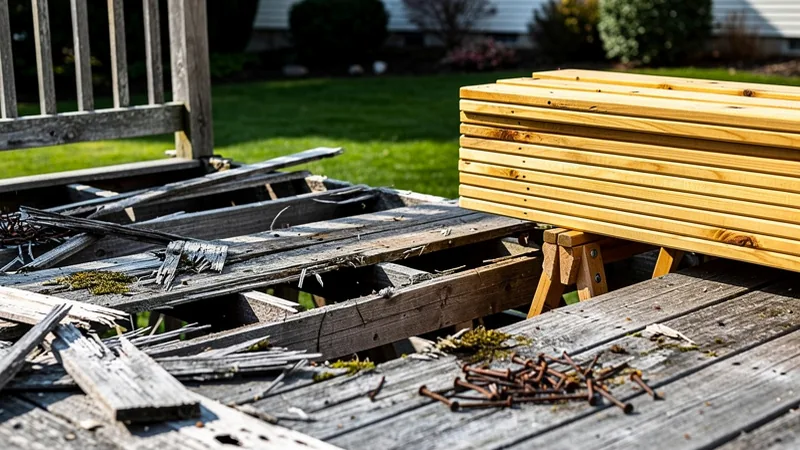
Topeka Deck Builders provides deck removal & rebuild in Topeka, KS.
Free On-Site Estimates · Permit Handling Included · Wood & Composite Decking
Tearing out an old, non-compliant deck and rebuilding it to current code, not just patching what's failing.
Older decks built before current permit and footing standards were consistently enforced are common across Shawnee County, and patching one that was never built to code just delays a bigger failure. We remove the old structure down to the footings, or past them if they're too shallow, and rebuild to current standards.
📞 Call (785) 329-4082Frequently Asked Questions
Do I need a permit to build a deck in Topeka?
Decks 150 square feet or smaller, no more than 30 inches above grade, and projecting 10 feet or less from the house are exempt. Anything larger, higher, or attached to the structure requires a City of Topeka building permit, which we pull and handle as part of the job.
How deep do deck footings need to be in Topeka?
Footings need to go below the local frost line, roughly 30 to 36 inches in the Topeka area, to avoid heaving during the region's 80 to 110 annual freeze-thaw cycles. A footing designed for a warmer climate is not code-compliant here.
How much does a new deck cost in Topeka?
There is no official Topeka price list; published 2026 figures put a basic pressure-treated deck at about $25 to $60 per square foot installed; composite boards alone cost about $5 to $20 per square foot before labor, and an installed composite deck typically runs two to three times a wood one. The provider gives a written price after seeing the site.
How often should a wood deck be restained in Kansas?
Most wood decks in the Topeka area need restaining every 2 to 3 years given the region's humid summers, sooner for decks with heavy afternoon sun exposure. Composite decking never needs restaining.
What areas do you serve around Topeka?
Topeka, Auburn, Silver Lake, Rossville, Tecumseh, and the rest of Shawnee County, KS.
My existing deck feels unstable — is it a repair or does it need to be rebuilt?
It depends on the footings, not just the boards. If the original footings weren't poured below frost depth, which is common in older decks built before code enforcement was consistent, patching the surface just delays a bigger failure. We inspect the substructure before recommending repair versus full rebuild.
How long does composite decking last compared to wood in Kansas?
Quality composite boards typically carry 25 to 50 year manufacturer warranties against rot, splitting and termites, while a pressure-treated wood deck in Kansas weather usually gives 10 to 20 good years, more if it's cleaned and resealed regularly. The boards are only half the story: the framing under composite is still treated wood in most decks, so joist tape over the joists and proper drainage are what let the frame keep up with the boards. If a deck is going to see full afternoon sun and freeze-thaw winters for decades, composite usually wins on total cost; for a budget deck you plan to replace anyway, wood still makes sense.
How long does it take to build a deck?
Once the permit is issued and materials are on site, a typical single-level deck takes about one to two weeks of work; multi-level decks, stairs, roofs or screened porches add more. The calendar time is usually longer than the build itself: design and quote, the City of Topeka or county permit review, footing inspections before the concrete is poured, and Kansas weather all add days. Spring fills up first, so planning in late winter gets you the earliest start.
Should deck posts be set in concrete?
The current best practice is not to bury wood posts in concrete. A post sunk in concrete traps water at the base and rots from the inside, often in the very spot you can't see. The better way is a concrete footing poured below the frost line with a metal post base on top, so the wood stays above grade and can dry out. If you're replacing posts on an older deck that were set in concrete, check them with a screwdriver at ground level: soft wood there means it's time.
Should my deck be attached to the house or freestanding?
Both are allowed when built right. An attached deck hangs on a ledger board bolted through the house's rim joist, with flashing above it so water can't get behind; a missing or rotted ledger connection is the most common cause of serious deck collapses. A freestanding deck has its own row of posts and footings next to the house instead, which avoids touching the siding and is often simpler on homes with brick veneer or a cantilevered floor. We decide case by case after looking at the house's rim joist.
Why is my deck bouncy?
A bouncy deck usually means the joists are spanning too far for their size, spaced too far apart, or missing blocking between them. Composite boards make it more noticeable: most brands require joists 16 inches apart, and 12 inches for diagonal boards, where many older wood decks were framed at 24. A bounce that's new on an old deck can also mean rot at the ledger or a post, which is a safety issue, not a comfort one. Adding a beam, sister joists or blocking often fixes it without tearing the deck out.
Can I put composite decking over my old wood deck?
Not over the old boards: composite has to be fastened directly to the joists, with the spacing the manufacturer requires, otherwise water gets trapped between the layers and the warranty is void. What you can often keep is the frame. If the joists, beams, posts and ledger are sound and the joist spacing fits composite, re-decking on the existing structure costs a lot less than a full rebuild. We check the framing first and tell you which way makes sense.
Why is my deck turning green?
Green on a deck is algae or mildew, and it thrives in Kansas' humid summers on boards that stay shaded or damp: under trees, on the north side of the house or where planters sit. On wood, clean it with a deck cleaner made for mildew and reseal; on composite, use the cleaner the board manufacturer recommends, since some pressure washer settings void the warranty. Trimming back branches and keeping gaps between boards clear of debris so the deck can dry out is what keeps it from coming back.